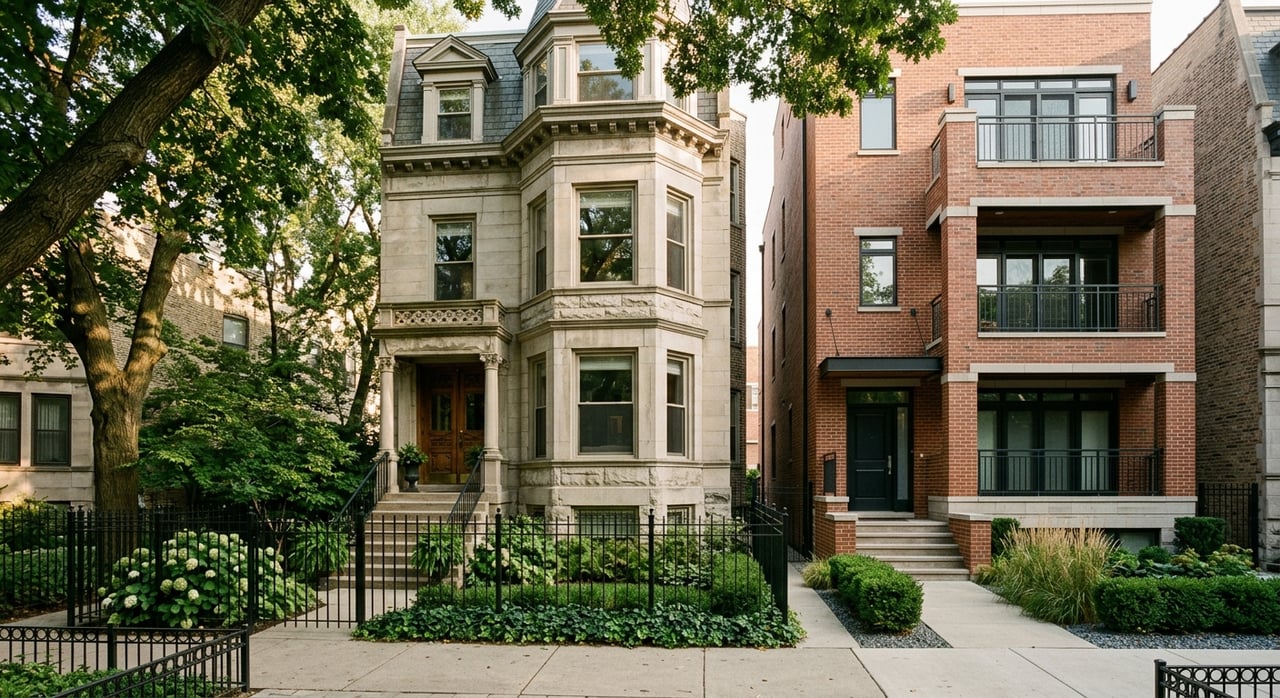
Looking at homes in Bronzeville can feel exciting and a little tricky at the same time. You may see a stately greystone on one block, a newer condo on the next, and a small multi-unit building a few doors down. If you want to understand what those differences mean for your budget, maintenance, and long-term plans, this guide will help you sort it out. Let’s dive in.
What Bronzeville housing really includes
Bronzeville is best understood as a commonly used neighborhood name rather than one official city planning boundary. For housing, the most useful data proxies are the Grand Boulevard and Douglas community areas, which are closely tied to how Bronzeville is commonly described.
That matters because Bronzeville is not a one-style market. It includes historic masonry homes, rowhouse-style properties, small multi-unit buildings, larger multifamily buildings, and a meaningful layer of newer construction. In other words, if you picture only old homes or only new condos, you are missing a big part of the story.
Why Bronzeville feels both historic and evolving
Bronzeville has deep architectural and cultural significance in Chicago. Landmark materials identify the Black Metropolis-Bronzeville Historic District, and Illinois recognizes a Bronzeville District as a state-designated cultural district.
You can also see that history in the housing stock itself. In Grand Boulevard, 32.5% of housing units were built before 1940, while 39.3% were built in 1990 or later. In Douglas, 16.7% were built before 1940, 40.3% were built from 1940 to 1969, and 17.8% were built in 1990 or later.
The takeaway is simple: Bronzeville is both old and new. You can find preserved character, mid-century housing, and more recent infill in the same broader area.
Greystones in Bronzeville
What makes a greystone a greystone
Greystones are one of Chicago’s classic residential forms. They are known for their slate-colored Bedford limestone exterior, and many were built from roughly 1880 to 1910.
In Bronzeville, greystones are closely tied to the neighborhood’s historic streetscape. Local walking tour material points to greystone and brownstone mansions on Calumet Avenue that rose as the area developed in the 1880s.
Why buyers are drawn to greystones
If you love historic detail, greystones often stand out right away. Masonry exteriors, stoops, and classic Chicago proportions give these homes a look that feels rooted and distinctive.
A greystone can appeal to you if character matters as much as square footage. Buyers are often drawn to the visual presence, older craftsmanship, and connection to Chicago architectural history.
What to think through before you buy
Historic character usually comes with more ownership responsibility. Depending on the property, you may need to budget for ongoing upkeep, repairs, and systems updates that can be different from what you might expect in newer construction.
That does not mean a greystone is the wrong fit. It simply means you should weigh charm against maintenance needs, your timeline for improvements, and the type of ownership experience you want.
Brick homes and rowhouses
Bronzeville has more than greystones
Greystones get a lot of attention, but Bronzeville’s low-rise housing stock is broader than that. Local coverage points to older houses and Italianate-style rowhouses from the 1880s, along with historic rowhouses and mansions on key residential streets.
For you as a buyer, that means Bronzeville offers several ways to buy into classic neighborhood character. Some homes may feel more like a traditional single-family house, while others reflect attached rowhouse-style living.
The tradeoff with single-family ownership
Single-family homes and rowhouse-style properties can offer more privacy and direct control over the property. You are generally making decisions about upkeep, repairs, and improvements without the structure of a homeowners association.
That independence can be appealing, but it also means the full responsibility sits with you. When you compare homes, think beyond the mortgage and include property taxes, insurance, and routine maintenance in your monthly budget.
Condos and newer infill
Newer housing is part of Bronzeville too
Bronzeville is not frozen in one era. In Grand Boulevard, 39.3% of housing units were built in 1990 or later, including 9.0% built in 2010 or later, which supports the presence of newer housing and infill in the area.
While that construction-age data is not a condo-specific count, it does help explain why many buyers encounter newer condo options as they search Bronzeville. These properties can offer a different ownership experience from older masonry homes.
Why condos appeal to many buyers
A condo can be a practical fit if you want lower day-to-day maintenance responsibility than a single-family home. Many buyers also like newer layouts, more recent finishes, or building amenities, depending on the property.
For first-time buyers especially, condos can feel more approachable because they may simplify some parts of upkeep. If you want neighborhood access without taking on every exterior maintenance task yourself, a condo may deserve a closer look.
Condo costs are different, not gone
One common misconception is that condos eliminate maintenance costs. In reality, they often shift some shared costs into HOA dues instead.
That is why your budget should include more than just principal and interest. You will want to factor in property taxes, insurance, and association dues so you can compare a condo fairly against a house or rowhome.
Two-flats, three-flats, and small multi-units
Small multi-units are a major part of the mix
Small multi-unit buildings are a big part of Bronzeville’s housing story. In Grand Boulevard, 2-unit buildings account for 4.4% of housing units, 3- or 4-unit buildings account for 21.1%, and 5- to 9-unit buildings account for 28.1%.
That matters because these properties reflect both a classic Chicago housing pattern and a practical ownership option. Two-flats and three-flats fit naturally into the city’s broader residential tradition.
Why owner-occupants and small investors look closely
If you are exploring house hacking or looking for flexibility, a small multi-unit property may stand out. Living in one unit while renting another can offer a different path to homeownership than buying a condo or single-family home.
These properties can also create more moving parts. You may need to evaluate building condition, maintenance needs, rental potential, and how the layout fits your own lifestyle.
Larger multifamily buildings also shape Bronzeville
Bronzeville’s housing story is not limited to low-rise homes. In Douglas, 20-plus-unit buildings account for 75.0% of housing units, showing how significant larger multifamily properties are in parts of the broader Bronzeville area.
This helps explain why Bronzeville can feel like both a homeownership neighborhood and a multifamily neighborhood at once. The built environment includes a wide range of property types, which gives buyers different entry points depending on their goals.
Is Bronzeville mostly owner-occupied or renter-heavy?
The answer is both, but the data leans renter-heavy. Douglas is 80.8% renter-occupied and 19.2% owner-occupied, while Grand Boulevard is 67.7% renter-occupied and 32.3% owner-occupied.
For you, that means the neighborhood can support very different housing experiences. You may be shopping in a building with many owner-occupants, on a block with mostly low-rise homes, or in an area where larger rental buildings are a major presence.
How to choose the right Bronzeville housing style
The best fit often comes down to your priorities rather than one property type being better than another. Start by thinking about how you want to live day to day, not just what looks best online.
Here are a few useful questions to ask yourself:
- Do you want historic character or newer finishes?
- Are you comfortable managing more repairs and upkeep?
- Would you prefer the structure of HOA-covered shared maintenance?
- Do you want privacy, or are you open to shared walls and shared spaces?
- Are you interested in a two- to four-unit property for added flexibility?
- What total monthly payment feels comfortable once taxes, insurance, maintenance, and dues are included?
If you answer those questions honestly, Bronzeville’s housing mix starts to make more sense. You are not just choosing a neighborhood. You are choosing an ownership experience.
Why local guidance matters in Bronzeville
In a neighborhood with this much variety, context matters. A newer condo, a historic greystone, and a small multi-unit building can each be a smart move, but they come with different tradeoffs around condition, budgeting, and long-term plans.
That is where calm, neighborhood-level guidance can make a real difference. When you understand the housing style in front of you and how it fits your goals, you can move with more confidence and fewer surprises.
If you are trying to figure out which Bronzeville housing style fits your budget and lifestyle, Vantage Chicago can help you compare your options with clear, local guidance.
FAQs
What types of homes can you find in Bronzeville?
- Bronzeville includes greystones, brick single-family homes, rowhouses, condos, newer infill housing, small multi-unit buildings, and larger multifamily properties.
Are greystones unique to Bronzeville in Chicago?
- No. Greystones are a broader Chicago housing form, but Bronzeville has prominent examples that are closely tied to its historic streetscape.
Is Bronzeville mostly old homes or new construction?
- It is a mix of both. The broader Bronzeville area includes older housing stock, mid-century buildings, and a meaningful share of homes built in 1990 or later.
What should you budget for when buying a Bronzeville condo?
- You should look at the full monthly cost, including mortgage, property taxes, insurance, and HOA dues, since condo ownership shifts some maintenance costs into shared expenses.
Are two-flats and three-flats common in Bronzeville?
- Yes. Small multi-unit buildings are an important part of the housing mix, especially in Grand Boulevard, where 3- and 4-unit and 5- to 9-unit buildings make up notable shares of the housing stock.
Is Bronzeville an owner-occupied neighborhood or a renter-heavy neighborhood?
- It includes both, but data for Douglas and Grand Boulevard shows a strong renter presence, which helps explain the area’s mix of homeownership and multifamily living.
